
PREMIUM LIFESTYLE JOURNAL
Dog Bed vs. Dog Crate: Which Sleeping Space Is Right for Your Dog?
A balanced guide to choosing the perfect resting spot for your companion. Here is dog bed vs dog crate, and how to choose.
Read the GuideThe Harmony of Rest
Beds & Crates Are Better Together
We view your dog's rest not as an either-or decision, but as a complete ritual of wellbeing. A premium bed and a modern crate are designed to serve complementary purposes. While an open orthopedic bed invites warm, social relaxation during active hours, a beautifully styled crate acts as a dedicated sanctuary for deep, distraction-free sleep. Together, they create a balanced living ecosystem that honors your dog's natural instincts while elevating your interior design. The AKC says to encourage naps in a safe place such as a crate, a dog bed, or a quiet place in the house.
Quick answer: dog bed vs dog crate? For many dogs, the best answer is both. The AKC says to encourage naps in a safe place such as a crate, a dog bed, or a quiet spot, and its crate guide says a properly sized crate can support potty training, but it should never be used for punishment, never for longer than your dog can hold their bladder, and never if it causes stress or panic. Choose a bed that fits how your dog sleeps, and ask your vet if your dog has anxiety or joint pain.
Explore Complementary Living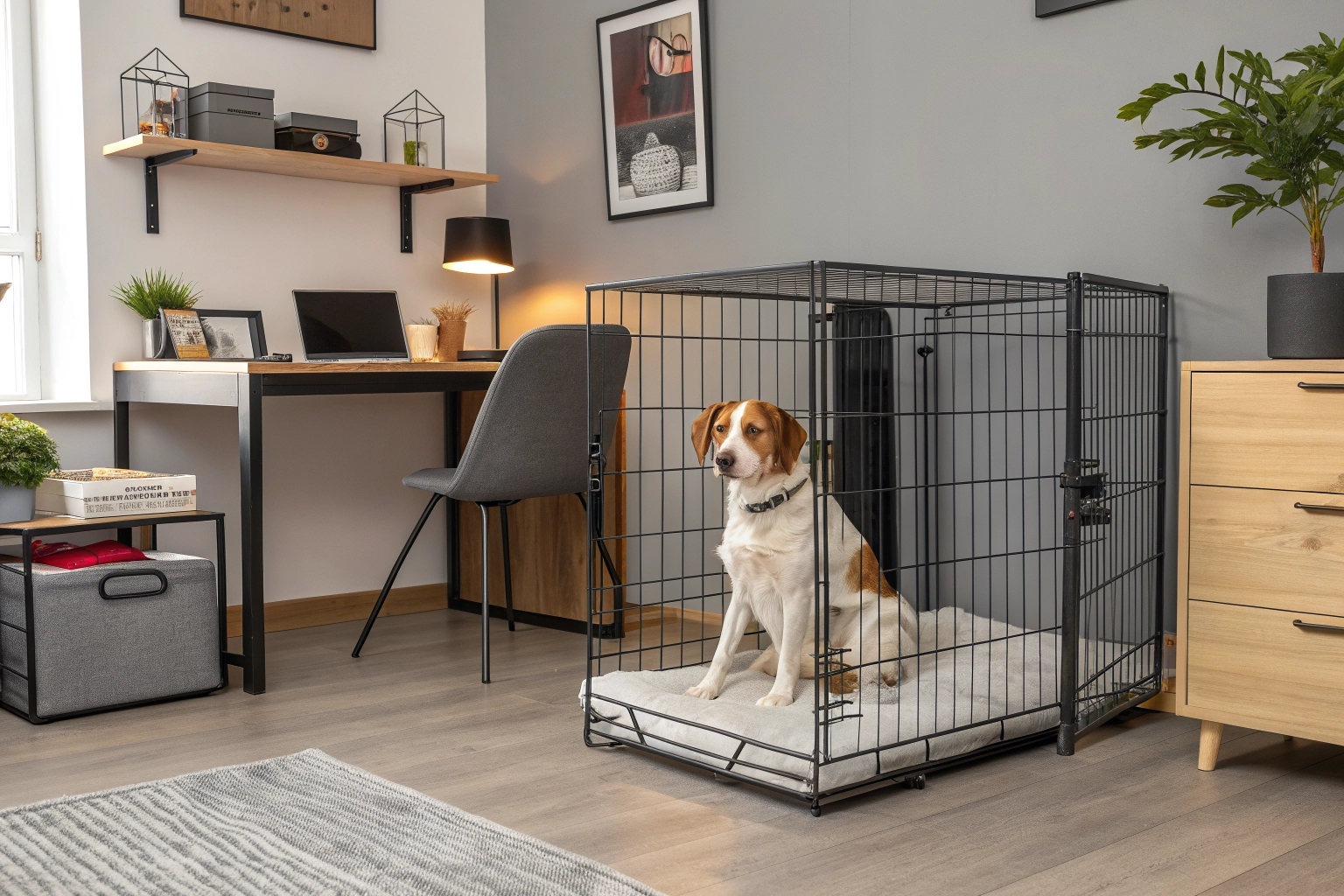
Key Takeaways
- Orthopedic Support: Vital for comforting older joints and ensuring healthy bone growth in active puppies.
- Size Scaling: Ensure the bed allows full stretching, while the crate remains snug enough to feel secure.
- Durable Materials: Invest in heavy-duty, chew-resistant fabrics to counter natural teething phases.
- Den Sizing Rule: Your puppy must be able to stand, turn around completely, and lie down comfortably.
- Thermal Regulation: Select breathable luxury memory foam bases to prevent overheating during long rests.
- Anxiety Reduction: Incorporate custom-fit, breathable crate covers to simulate a safe, quiet sanctuary.
- Washable Liners: Removable, waterproof inner liners are essential for maintaining premium hygiene standard.
- Non-Slip Grounding: Heavy rubberized bases prevent dangerous slipping on hardwood or polished tile.
- Positive Associations: Never use the crate as punishment; utilize treats and soft toys to build lasting comfort.
At a Glance Comparison
Dog Bed vs. Dog Crate
DOG BED
- Offers luxurious joint support and cushioning for restful sleep
- Promotes a sense of freedom and easy, open-air relaxation
- Sparsely designed to integrate into living rooms or bedrooms
- Ideal for self-regulation during daytime naps and socialization
- Serves as a comfortable, positive space for 'place' command training
DOG CRATE
- Creates a secure, den-like sanctuary that helps reduce anxiety
- An essential and proven tool for swift puppy house training
- Ensures absolute safety when unsupervised or during travel
- Prevents destructive chewing and accidental ingestion hazards
- Provides a cozy, distraction-free environment for deep, recovery rest
EXPERT ADVICE
Dog Bed vs Dog Crate: What the Experts Say
02
Crates Help When Used Humanely
The AKC’s crate training guide says a properly sized crate can support potty training and help prevent destructive behavior, and that puppies who are well rested tend to chew less. It says a crate should never be used for punishment, never for longer than your dog is comfortable or can hold their bladder, and never if it causes stress or panic. See how long can a puppy hold its bladder.
03
Match the Bed to How Your Dog Sleeps
The RSPCA says round or oval beds with a side suit dogs that curl up, mattress beds suit dogs that lie flat, and box beds keep dogs warm and protected from draughts, while other beds may be better in summer. It suggests a warm, draught-free spot and giving your dog options. See how to choose the perfect dog bed and how to tell if your dog’s bed is too small.
ELEVATING CANINE REST
What Is a Dog Bed Designed For?
Beyond simple cushioning, a premium dog bed serves as a vital foundation for your companion’s health and longevity. It is engineered to distribute body weight evenly, insulating them against drafty floors while cradling pressure points. Whether for a quick afternoon nap, long daily rest, or deep night recovery, the right structural base provides a safe sensory boundary where they can relax fully. Orthopedic claims for beds are not well established, and the AKC advises not buying an expensive dog bed for a new puppy, because they are likely to chew it up. Ask your vet about joint pain. A bed is one side of dog bed vs dog crate.
- Cushion Beds: Streamlined, low-profile pads perfect for daytime sprawling.
- Bolster Beds: Wraparound raised walls that support heavy heads and satisfy nesting instincts.
- Donut Beds: Ultra-plush circular nests crafted to promote security and ease anxiety.
- Orthopedic Support: Solid, dense memory bases engineered to soothe joints in senior dogs.


COMFORT & SECURITY
What Is a Dog Crate Designed For?
At its heart, a premium crate fulfills a dog's natural denning instinct. It is designed to be a personal, comforting haven where your pet can rest undisturbed, safe inside their own cozy, designated sanctuary. The AKC says a crate should be just large enough to stand up, turn around, and lie down comfortably, and that crates can support potty training and help prevent destructive behavior. A crate is the other side of dog bed vs dog crate.
- Puppy House-Training: Utilizes natural clean-sleeping instincts to establish secure routines.
- Safe & Secure Transport: Protects your companion during car rides and transit.
- Private Quiet Retreats: Provides a peaceful hideaway to decompress and find solace.
✨ Building Positive Associations: Always introduce the crate gently with favorite toys, comfortable bedding, and premium reward treats. This transforms training into a lifetime of reassuring security. The AKC says never to crate your dog longer than they are comfortable or can hold their bladder, and never if it causes stress or panic. Crates do not reduce anxiety for every dog.
SAFETY NOTES
Dog Bed vs Dog Crate: Safety Notes
01
A Crate Is Not Right for Every Dog
The AKC says never to crate your dog if it causes stress or panic, and to watch for pacing, shaking, scratching or biting at the door, long bouts of howling or barking, or drooling. The ASPCA notes that crate training can help some dogs that learn the crate is their safe place, but for others a crate can cause added stress and anxiety. See how to help a dog with separation anxiety and how to teach your dog to be alone at home.
02
Collar Off and Chew-Safe Bedding
The AKC says that for safety you should always take your dog’s collar off when they are in the crate. Its sleep guide advises not buying an expensive dog bed for a new pup, because they are likely to chew it up, suggests inexpensive felted blankets, and warns that wool blankets or mats can be chewed into long strings that cause choking. See how to stop your dog from chewing everything.
03
Puppies, Seniors, and Time Alone
Young puppies need frequent breaks, and older dogs with stiff joints may prefer a supportive, easy-to-enter bed. The PDSA says arthritis is very common and lists stiffness after rest, limping, and reluctance to jump or climb among the symptoms, so ask your vet if your dog seems sore. See how to create the perfect sleeping space for a senior dog.
Frequently Asked Questions
Quick answers about dog bed vs dog crate, safe use, and how to choose. Start with the big question: which is better, a dog bed or a dog crate?
Dog bed vs dog crate: which is better for a puppy?
Many puppies do well with both: a correctly sized crate near your bed for sleep and supervised rest, and a simple bed for daytime lounging. The AKC says a properly sized crate can support potty training, and suggests naps in a crate, a dog bed, or a quiet spot. See our guide on what a puppy should sleep in.
Dog bed vs dog crate: which is better for an adult dog?
It depends on your dog. A bed suits dogs that settle calmly and are trustworthy alone, while a crate can help dogs that need management, travel, or recovery rest. The AKC says never to crate a dog if it causes stress or panic.
Should my dog sleep in a crate or a bed at night?
Either can work. For puppies, the AKC says many owners place the crate in their bedroom so the puppy can feel the family is close. For adults, choose the option your dog settles in comfortably and safely.
Can I put a dog bed inside a crate?
Only a flat, chew-resistant pad is safest. The AKC advises not buying an expensive bed for a new pup, because they are likely to chew it up, suggests inexpensive felted blankets, and warns that wool blankets or mats can be chewed into strings that cause choking.
Is a dog crate cruel?
Not when it is used humanely. The AKC says dogs can learn to love their personal den, but a crate should never be used for punishment, never for longer than your dog is comfortable or can hold their bladder, and never if it causes stress or panic.
How big should a dog crate be?
The AKC says it should be just large enough for your dog to stand up, turn around, and lie down comfortably, and suggests a crate with a divider so it can grow with a puppy. A crate that is too large lets a puppy eliminate in one end and sleep in the other.
How long can a dog stay in a crate?
No longer than they are comfortable or can hold their bladder, according to the AKC. Puppies need much shorter stretches. See our guide on how long a puppy can hold its bladder, and ask a dog sitter or walker to help if you are away for long periods.
What type of dog bed should I choose?
Match the bed to how your dog sleeps. The RSPCA says round or oval beds with a side suit dogs that curl up, mattress beds suit dogs that lie flat, and box beds keep dogs warm and protected from draughts. Other beds may be better in summer when your dog wants to stay cooler.
Where should I put my dog’s bed or crate?
The RSPCA suggests somewhere warm and draught-free and giving your dog options, such as one bed in a quiet part of the house where your dog can rest undisturbed and one in a room where the family spends time.
Dog bed vs dog crate for a dog with separation anxiety?
Be careful. The AKC says never to crate a dog if it causes stress or panic, and the ASPCA says a crate can cause added stress for some dogs. A comfortable bed in a safe, quiet space plus gradual training may suit better, and your vet can advise. See our guide on how to help a dog with separation anxiety.
Dog bed vs dog crate for senior dogs?
Seniors often benefit from an easy-to-enter bed that supports stiff joints. The PDSA says arthritis is very common and causes stiffness after rest, limping, and reluctance to jump or climb, so ask your vet if your dog seems sore. See our guide on a sleeping space for a senior dog.
Should I take my dog’s collar off in the crate?
Yes. The AKC says that for safety you should always take your dog’s collar off when they are in the crate, so it cannot catch on the crate.
Every Dog's Sleep Journey is Unique
There is no single formula for the perfect nap. Just like us, our companions require personalized comfort tailored to their size, age, and sleeping style. By observing their subtle habits, you can curate a peaceful sanctuary that promotes true, restorative rest. See what should a puppy sleep in, do dogs need their own bed, and how to choose the perfect dog bed. Every dog answers dog bed vs dog crate differently.
Explore Premium Dog BedsCreate the Perfect Sleep Setup
A thoughtful 12-point architectural and lifestyle checklist designed to craft an editorial-grade, secure, and nurturing resting sanctuary for your canine companion. It applies whichever side of dog bed vs dog crate you choose.
1. Correct Bed Size
Ensure ample surface area to accommodate full body extension, natural nesting, and cozy curling. See how to tell if your dog’s bed is too small. Size matters in dog bed vs dog crate.
2. Supportive Bedding
Integrate premium orthopedic foam or plush layers that protect fragile, growing puppy joints. This is a product claim, so ask your vet about joint health.
3. Sized Crate Space
Opt for a tailored scale that feels snugly comforting yet allows them to comfortably stand and rotate. The AKC says the crate should be just large enough to stand up, turn around, and lie down comfortably. Crate size is a key part of dog bed vs dog crate.
4. Well Ventilated
Promote constant air circulation to regulate temperature and keep sleeping environments cool. Airflow matters in dog bed vs dog crate.
5. Calm Areas
Position beds away from high-traffic household corridors to cultivate deeper, uninterrupted sleep cycles. See 7 simple ways to make your dog feel more comfortable at home.
6. Keep Clean
Utilize removable, hypoallergenic covers that are effortlessly machine washable to maintain freshness. See how to choose a washable dog bed and how to clean a dog bed. Cleanliness matters in dog bed vs dog crate.
7. Positive Space
Cultivate happy vibes by placing gentle chew toys or healthy treats in the space to build a comforting bond. See how to choose the best toys for your dog.
8. Never Punishment
Strictly safeguard their bed or crate. Never use it for isolation, scolding, or forced confinement. The AKC agrees: never use the crate for punishment.
9. Exercise Before Rest
Pair light, interactive play or gentle mental stimulation just before sleep to ease natural wind-down. See how often to walk your dog and 10 easy ways to keep your dog happy and entertained at home.
10. Bathroom Breaks
Coordinate a brief outdoor visit right before bedtime to minimize nighttime awakenings and restlessness. See how to potty train a puppy and how long can a puppy hold its bladder.
11. Watch for Discomfort
Note shifting or whining. Slight updates to room temperature or mattress softeness can work wonders. See how to tell if your dog is comfortable.
12. Give Choices
Offer secondary sleeping zones nearby so they can intuitively select cool tiles or warm knits as needed. The RSPCA suggests giving your dog options, such as one bed in a quiet part of the house and another where the family spends time.